How Laws Reshape the Way Clothes Get Made
Every piece of clothing you own goes through a long chain of decisions before it ever reaches the store. Those decisions include which fabrics to use, where garments are cut, how they are sewn, and how they are shipped. Cost, trend forecasting, and consumer demand help shape this process. Legal requirements can also influence these decisions and require companies to reconsider production decisions. Two examples, a California settlement involving BPA in athletic shirts and a French law targeting ultra fast fashion, show how regulation can affect material choices, product information, and marketing practices.
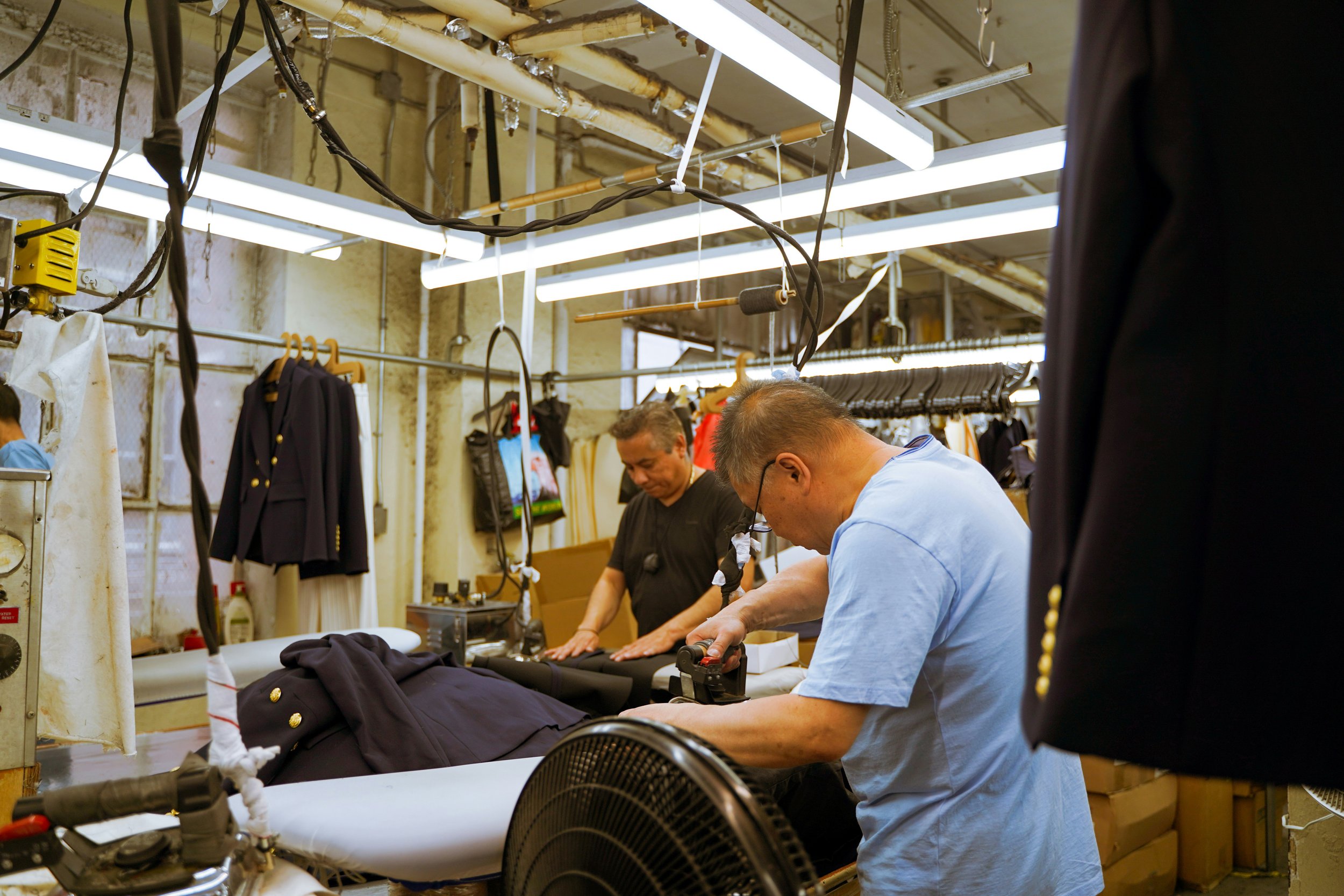
Figure 1. Workers at a garment factory in Manhattan, New York City. Garments pass through many hands and stages of production before reaching a retail floor, a process laws like these are now reaching into.
Note. From Workers complete their assignments at a garment factory in Manhattan, New York City, by J. Tong, 2024, Unsplash. https://unsplash.com/photos/a-group-of-men-working-on-a-machine-in-a-factory-Hl_u7TutlFw
Why Product Development Already Has So Many Steps
Before examining the regulations, it helps to understand the stages involved in developing a garment. Stone and Farnan (2022) describe a six stage product development process: planning the line, creating the design concept, developing the designs, planning production, production, and distributing the line. Sourcing decisions, like where the fabric and components come from and whether garments are cut and sewn domestically or offshore, happen specifically during the production planning stage (Stone & Farnan, 2022). That means any rule about materials or manufacturing practices does not just affect the finished product sitting on a shelf. It reaches back into decisions manufacturers are making months, sometimes a year, before the clothes are ever sold.
With that process in mind, here is how two different laws are stepping into it.
California’s Prop 65: Changing What’s In the Fabric
California’s Proposition 65 settlement, finalized in 2023, targeted athletic shirts made mainly of polyester with spandex that contained bisphenol A, or BPA (SGS, 2023). There was a documented rise in 60 day legal notices for BPA that year, with multiple brands, retailers, and manufacturers served notices by the California Center for Environmental Health (CEH) alleging Prop 65 violations (SGS, 2023). These notices cited a failure to provide correct warnings on products containing BPA, including sports bras, socks, and athletic shorts, items that are primarily made of polyester and spandex (SGS, 2023).
The settlement provides a reformulation option specifying no more than ten parts per billion (ppb) of BPA in covered athletic shirts. It also prohibits substituting other bisphenols, including BPS. Alternatively, the settlement permits an appropriate warning rather than requiring companies to meet the reformulation limit (SGS, 2023).
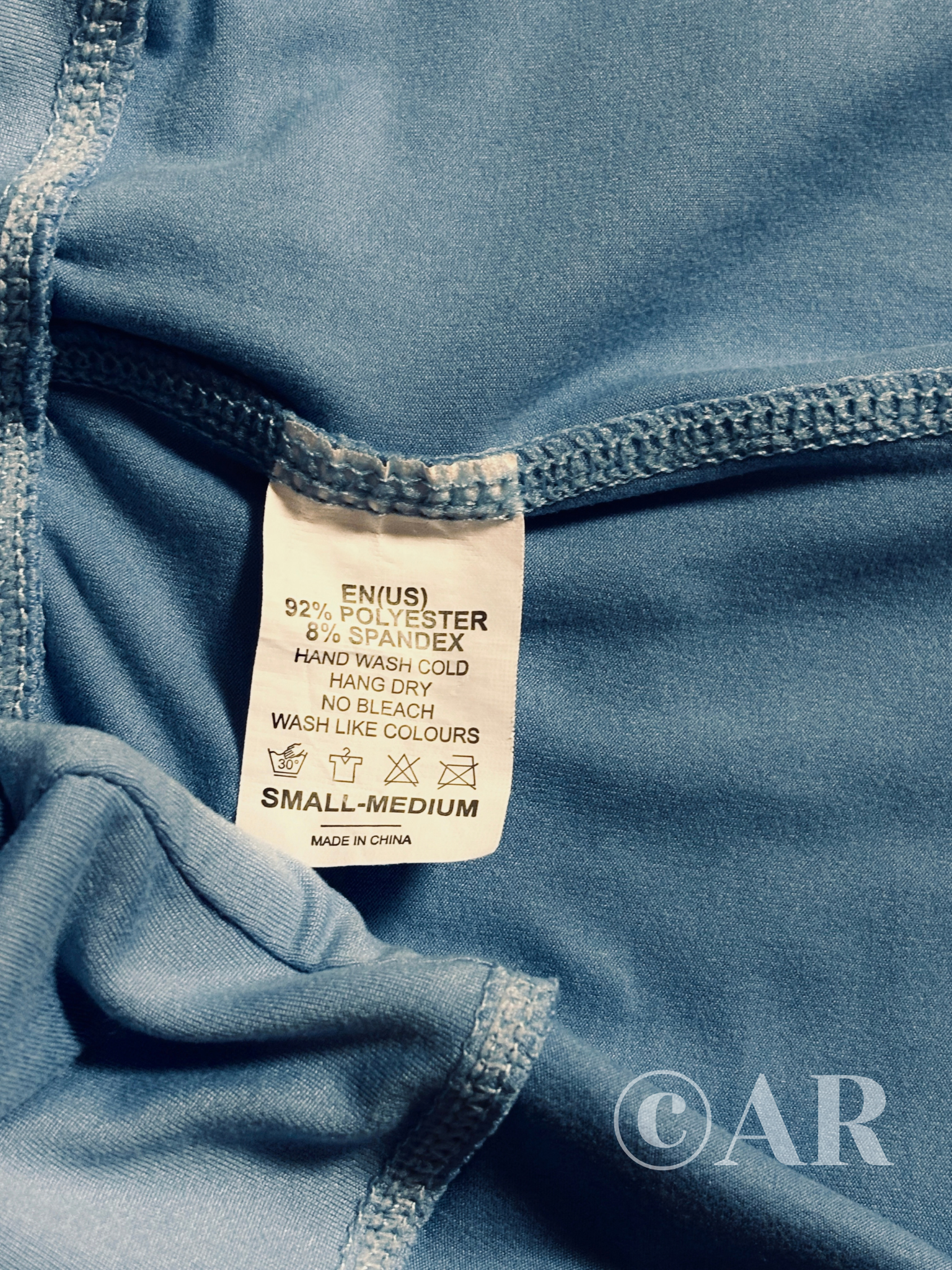
Figure 2. Clothing label showing a polyester spandex blend. This label lists 92% polyester and 8% spandex illustrating the general type of fabric composition discussed in SGS’s report on the BPA settlement involving athletic shirts (SGS, 2023). The label alone does not establish whether this garment contains BPA or is covered by the settlement.
Note. Original photograph by Ava Remillard, 2026.
Now, from a health standpoint. The root of all of this. SGS (2023) identifies reproductive harm among the health concerns associated with BPA. However, a fiber content label alone cannot establish whether a particular garment contains BPA or presents an exposure concern.
The process has a 60 day notice period before a private enforcement lawsuit. Once a company receives their notice, they are given 60 days to cooperate with CEH and correct their alleged violations before the organization initiates a formal complaint in California state court (SGS, 2023).
What this means for product development
In my analysis, the settlement illustrates how legal requirements can influence material selection during production planning. A company bound by the settlement that chooses reformulation would need to consider BPA content when sourcing materials. A company choosing the permitted warning option would need to address how that warning is provided. Stone and Farnan (2022) describe labeling as part of finishing the product, offering one connection between product information and the production process.
France’s New Law: Changing How Fashion Gets Made and Sold
While the California settlement addresses BPA in covered athletic shirts, France just passed something much broader. The Law of July 8, 2026 was enacted specifically to discourage ultra fast fashion and reduce the environmental impact of textile waste (Gilbert, 2026). The law builds on existing French regulations. Including, the 2020 “Anti-Waste” (AGEC) Law, which introduced financial incentives to repair products, and the 2021 “Climate and Resilience” Law, which mandated environmental labeling in the textile industry (Gilbert, 2026).
The law gives a specific legal definition for “ultra fast fashion”. Under the French Environmental Code, the term covers producers' industrial and commercial practices that place a large volume of new clothing, footwear, or home textiles on the market while providing little incentive to repair them (Gilbert, 2026). A company has to meet both conditions, a large number of new product references and little incentive to repair them, to be classified as ultra fast fashion under the law (Gilbert, 2026).
Here are parts, necessary for this discussion, of the new law broken down:
Requires sustainability messaging on covered online platforms:
Covered marketplaces and platforms must display messages encouraging moderation, reuse, repair, repurposing, and recycling. They must also inform consumers about products’ social, environmental, and health impacts, including the environmental impacts of delivery (Gilbert, 2026).
Requires clear disclosure of manufacturing locations:
E-commerce platforms must display a product’s manufacturing locations near its price, using the same font size (Gilbert, 2026).
Provides for restrictions on advertising:
These cover advertising for ultra fast fashion products, and direct or indirect promotion of brands engaging in those practices. The law also prohibits using “free” as a marketing or promotional tool for those products in commercial relationships (Gilbert, 2026).
Provides for restrictions on influencer promotion:
These prohibit commercial influencers from promoting covered ultra fast fashion products or brands, whether compensated or unpaid. Violations carry an administrative fine of up to €100,000, approximately $114,000 as reported by Gilbert (2026).
Requires education on sustainable textile consumption:
The law amends France’s Education Code to require education on responsible materials, production conditions, labeling, and sustainable consumption practices for textile and clothing products (Gilbert, 2026).
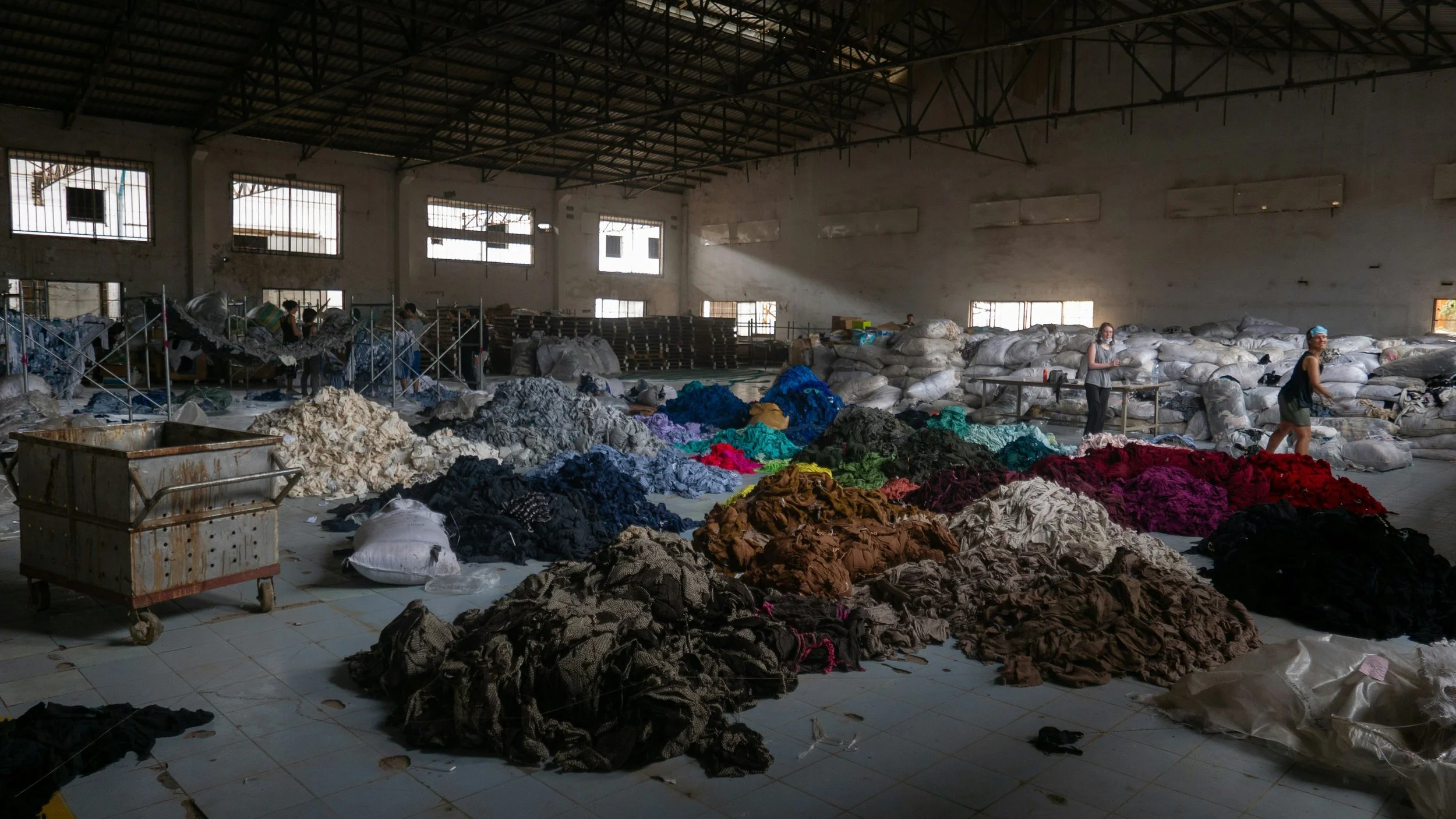
Figure 3. Workers sort textiles at a facility in Phnom Penh, Cambodia, as part of the Clothing the Loop social mission. The photograph illustrates textile sorting. It does not establish that the pictured materials came from ultra fast fashion brands.
What this means for product development
In my analysis, France’s law can affect several activities connected to product development and marketing. Manufacturing location disclosures create a need for accurate supplier information, while online messaging requirements affect how products are presented to consumers. The law also provides for restrictions on advertising and influencer promotion (Gilbert, 2026). These requirements may lead covered companies to revise supplier information systems, online listings, or marketing plans, connecting regulation with the planning and distribution activities described by Stone and Farnan (2022).
Two Laws, Two Different Pressure Points
Compared side by side, these two examples show that regulation is not one single kind of obstacle for product development. It can influence different decisions within fashion product development:
Material choices and warnings:
The California settlement provides covered companies with a reformulation option that limits BPA in athletic shirts, while also permitting an appropriate warning as an alternative (SGS, 2023).
Product information and promotion:
France’s law introduces manufacturing location disclosures and sustainability messaging requirements, along with provisions restricting advertising and influencer promotion of ultra fast fashion (Gilbert, 2026).
Different enforcement mechanisms:
The California example involves a 60 day notice period before a private enforcement lawsuit. France’s law establishes a financial penalty schedule that increases over time, with lower amounts in 2026 and higher amounts beginning in 2030 (Gilbert, 2026; SGS, 2023).
Connections to product development:
In my analysis, these requirements can influence several stages described by Stone and Farnan (2022), including sourcing, production planning, and preparing products for distribution. Companies may need to consider material specifications, product warnings, and the manufacturing information available from suppliers.
For consumers, some effects of regulation happen behind the scenes, through decisions about materials, suppliers, and production planning. Others become visible through product warnings, manufacturing disclosures, and sustainability messages. These examples suggest that manufacturers and merchandisers need to consider legal requirements alongside trend forecasting, cost analysis, and seasonal timing. Regulation can therefore influence both how fashion products reach the market and the information consumers encounter when deciding what to buy.
References
Gilbert, L. (2026, July 14). France: New fast-fashion law adopted to limit textile waste. Law Library of Congress, Global Legal Monitor. https://www.loc.gov/item/global-legal-monitor/2026-07-14/france-new-fast-fashion-law-adopted-to-limit-textile-waste/
Le Nguyen, F. (2020, November 22). Sorting through hundreds of tons of clothing in an abandoned factory for a social mission called Clothing the Loop [Photograph]. Unsplash. https://unsplash.com/photos/people-sorting-textile-scraps-in-warehouse-pouTfHUG430
Remillard, A. (2026, October 2). Clothing tag showing a 92% polyester, 8% spandex fiber blend [Photograph]. Original work.
SGS. (2023, December 20). US California Proposition 65 settlement for BPA in athletic shirts. SafeGuardS Softlines. https://www.sgs.com/en-us/news/2023/12/safeguards-16723-us-california-proposition-65-settlement-for-bpa-in-athletic-shirt
Stone, E., & Farnan, S. A. (2022). The Dynamics of Fashion (6th ed.). Bloomsbury USA. https://reader2.yuzu.com/books/9781501373060
Tong, J. (2024, July 21). Workers complete their assignments at a garment factory in Manhattan, New York City [Photograph]. Unsplash. https://unsplash.com/photos/a-group-of-men-working-on-a-machine-in-a-factory-Hl_u7TutlFw
