How Does Your Free Time Shape What’s in Your Closet?
Free time is not what it used to be. Work, family, and home responsibilities all compete for the same hours in a day, leaving less time for leisure. This competition goes further than simply changing how people spend their free time, it can also influence the way people think about their everyday clothing. Research suggests a relationship between the way people spend their leisure time and the clothing they buy. When there is less time available for leisure, the time that remains becomes divided among different activities. As a result, clothing can be expected to serve more than one purpose within the same day.
Rather than dressing for one specific activity at a time, people may need clothing that can move between several different parts of their schedules. A single outfit may need to go with someone from the office to drinks, from running errands to dinner, or from a city day to an evening event. This helps explain why versatility has become an important part of how clothing can fit into everyday life. The relationship between leisure and fashion is therefore not simply about what people like to wear, it is what their limited time requires from their clothing.
An outfit as simple as jeans, a jacket, and sneakers shows this in action. It can carry someone from a walk across the city running errands to meeting a friend all without a change of clothes in between.
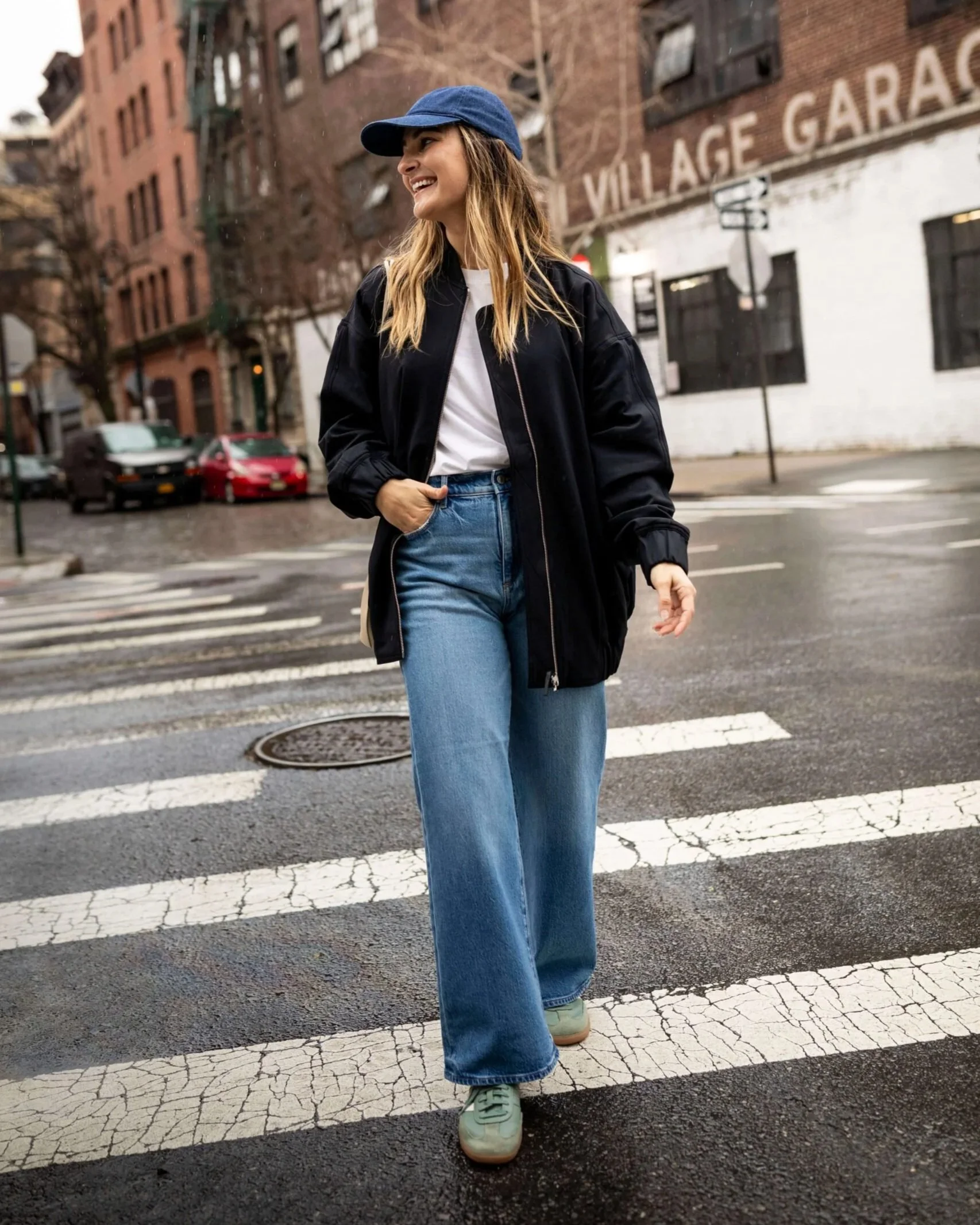
Figure 1
This image comes from a “what to wear” style guide, the kind of content people turn to for outfit inspiration. It reflects how versatile, everyday looks like this one get circulated and adopted as go to styles.
Note. From What to Wear in NYC in Fall, by Camille, 2026, Charmed by Camille. https://charmedbycamille.com/what-to-wear-in-nyc-in-fall/
Changing Lifestyles and the Need for Versatile Clothing
The competing demands of work and home life leave, as fashion researchers Stone and Farnan put it, “less and less time for the pursuit of other activities, whether those activities be a fitness regimen, community work, entertainment, relaxation—or even shopping” (Stone & Farnan, 2022, p. 42). The significance of this observation is not just that people have less time available, it is that the limited time can be divided across a diverse range of activities.
There is no single way that everyone spends their free time. One may use their time for exercise, while another spends it shopping, relaxing at home, or visiting their community. This variety makes the relationship between leisure time and clothing more complicated, because there is not one universal "leisure lifestyle” that clothing can be designed around.
This variety also helps explain the appeal of clothing that can work across different situations. When a person’s day contains several activities, an outfit with only one purpose may be seen as less practical than one that can switch between settings and purpose. The clothing itself has to fit into the movement of the day.
This does not mean formal clothing disappeared or that every consumer wants the same type of wardrobe. Instead, it shows how changing patterns of everyday life can influence what people expect from clothing. What someone needs from their clothing can be connected to what they are doing with their time. As leisure becomes divided, clothing can become part of the solution for managing transitions throughout the day (Stone & Farnan, 2022).
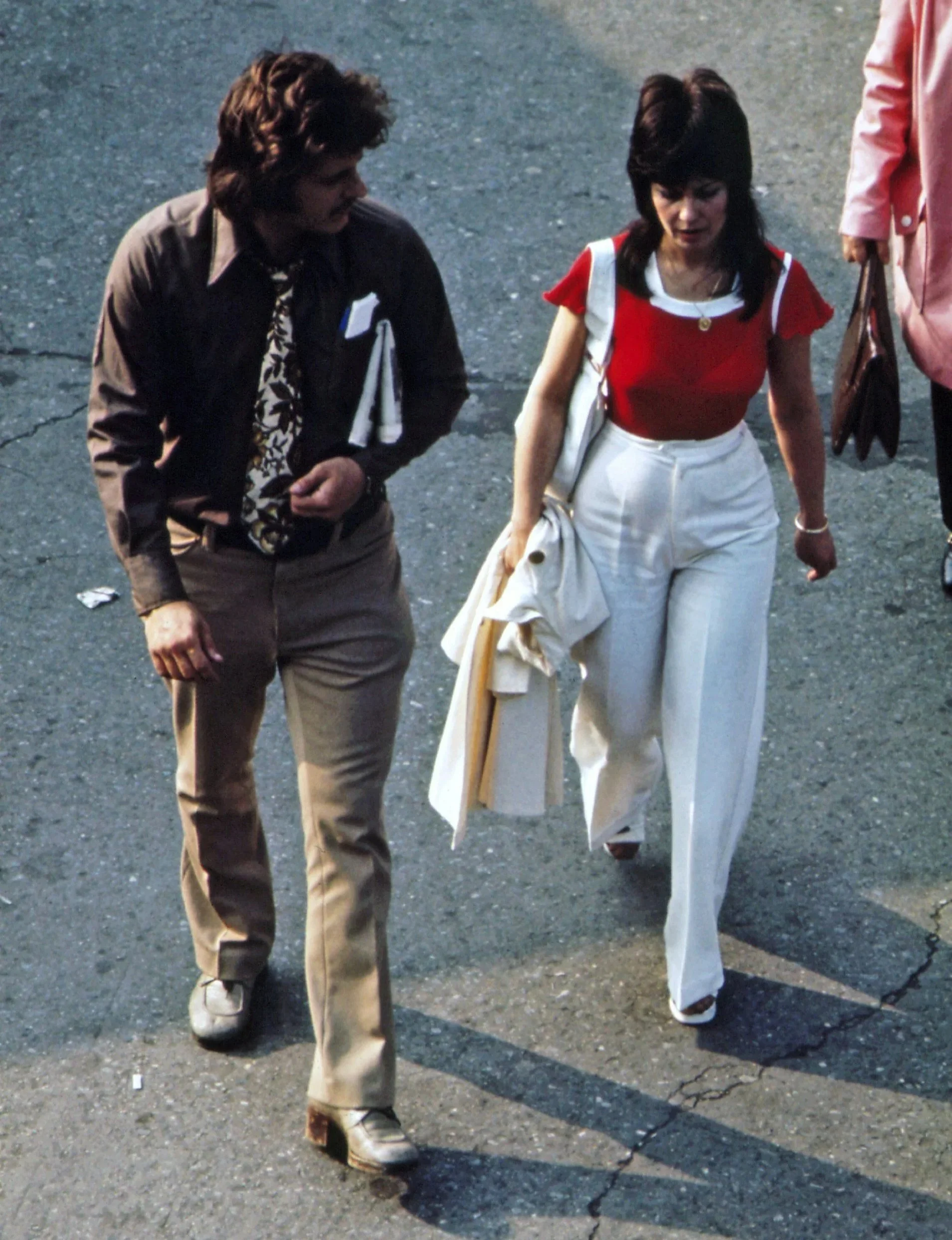
Figure 2
Both figures wear pants rather than more formal attire, reflecting the shift Stone and Farnan describe taking hold by the 1970s.
Note. From May 1973: Approaching the entrance to Staten Island Ferry, New York, by Documerica, 2022, Unsplash. https://unsplash.com/photos/a-man-and-woman-walking-down-a-sidewalk-yQFRj0Hmmi0?utm_source=unsplash&utm_medium=referral&utm_content=creditCopyText
The Rise of Casual Clothing
This is not a new phenomenon. The shift toward more casual and versatile clothing has been developing since the twentieth century. Stone and Farnan (2022) describe several decades in which casual clothing became increasingly accepted in everyday life.
1950s: With the growth of suburbs, the market for casual apparel developed (Stone & Farnan, 2022).
1960s: The “do your own thing” movement guided the acceptance of casual clothing in settings where attire had previously been more formal (Stone & Farnan, 2022).
1970s: Slacks, pantsuits, and jeans became everyday staples for both men and women (Stone & Farnan, 2022).
Casual clothing was not simply introduced all at once. Each decade contributed to its growing acceptance and helped expand the situations in which less formal clothing could be considered presentable.
The history matters because it places today's interest in versatile clothing into context. The acceptance of casual apparel developed over time, alongside changes in how people live and use their time. It is more than a change in fashion preferences, it is a reorganization of how people think about dressing for their lives (Stone & Farnan, 2022).
Versatility in Everyday Life
Here's what that demand for versatile clothing can actually look like in action. In a recent 2026 Wall Street Journal piece on Berlin, model and actress Heidi Klum described her ideal day in the city. Her day included breakfast, visiting galleries and small boutiques, spending time in parks, having lunch, and ending the day with dinner (Lippe-McGraw, 2026).
Klum’s schedule does not represent everyone’s lifestyle, but it does provide a concrete example of how several different activities can exist within the same day. A schedule like this can require an outfit to serve several purposes. Clothing needs to be appropriate for visiting a gallery, comfortable for walking around the city, suitable for visiting boutiques and parks, and still appropriate for dinner later in the day. If the goal is to move through activities without taking time to change, versatility becomes an important consideration.
Capsule Wardrobes and Consumer Values
A related idea is the concept of a capsule wardrobe. Cambridge Dictionary defines a capsule wardrobe as a small collection of clothes that can be combined in different ways to cover everything someone would normally need to wear (Cambridge University Press & Assessment, n.d.). The concept is therefore built around a relatively limited collection of pieces that can work together in multiple combinations.
In a 2025 study on sustainable and responsible consumption, researchers describe the concept as a way of tackling the excessive waste caused by fast fashion's mass produced, short cycle clothing. The idea is to build a smaller collection of good quality, durable pieces that can be worn in a variety of ways (Magano et al., 2025).
The study’s focus is sustainability and consumer motivation rather than leisure time. It does not establish that people create capsule wardrobes because they have less leisure time. However, the design principle of versatility provides a useful connection to the discussion of leisure and clothing. Both ideas involve getting more use and flexibility from individual pieces of clothing.
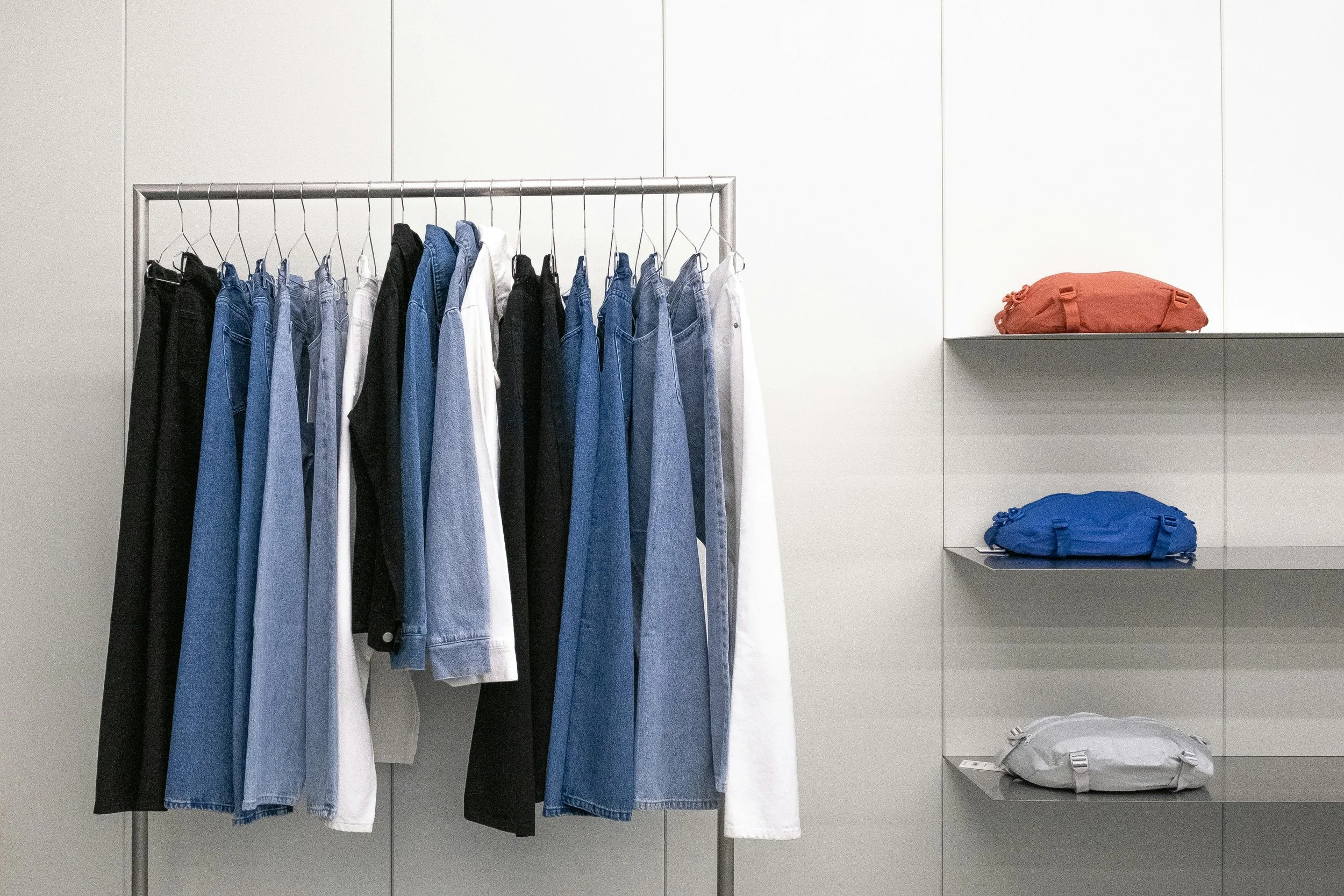
Figure 3
A small coordinated closet reflects the capsule wardrobe idea: fewer pieces that can be combined in more ways.
Note. From Shu clothes, by N. Mario, 2021, Unsplash. https://unsplash.com/photos/blue-and-white-bath-towels-1gNC4n3QtTs?utm_source=unsplash&utm_medium=referral&utm_content=creditCopyText
The researchers also describe consumers as evaluating clothing purchases through two different types of value: hedonic value, which relates to the emotional payoff of a purchase, and utilitarian value, which relates to its practical usefulness (Magano et al., 2025).
Both values add another layer to the relationship between lifestyle and clothing choices. No type of consumer is right or wrong; instead, the study demonstrates that clothing purchases can involve motivations. One person may value clothing for its usefulness, while another may enjoy the emotional experience of purchasing clothing. The decision to build a more limited and versatile wardrobe can depend on what the consumer values when making a purchase (Magano et al., 2025).
What This Means for How We Shop
When considered together, the research points to a relationship between leisure time, lifestyle, and clothing choices:
People have less leisure time than they used to and what time they do have can be divided among a variety of different activities (Stone & Farnan, 2022).
The diversity in how leisure time is spent creates a need for clothing that can move between settings without a wardrobe change (Stone & Farnan, 2022).
Casual clothing helped meet this need, and its acceptance developed across the 1950s, 1960s, and 1970s (Stone & Farnan, 2022).
Some consumers may address the demand for versatility through capsule wardrobes, which center on fewer, durable pieces that can be combined in different ways (Cambridge University Press & Assessment, n.d.; Magano et al., 2025).
Whether consumers adopt a capsule wardrobe can depend on what they value when shopping, including practical usefulness and emotional payoff (Magano et al., 2025).
For consumers, this relationship is worth considering when making clothing purchases. A consumer is not simply buying a top or pair of pants. The clothing must also fit into different parts of the week and, in some cases, several different activities within the same day. The more varied the schedule, the more useful clothing that works across different situations can become. What a consumer chooses to buy can reflect not only personal style, but also the practical demands of their everyday routine. This demonstrates how the sociological environment can influence everyday clothing choices, whether consumers are consciously aware of that influence or not.
References
Cambridge University Press & Assessment. (n.d.). Capsule wardrobe. In Cambridge dictionary. Retrieved September 24, 2026, from https://dictionary.cambridge.org/us/dictionary/english/capsule-wardrobe
Camille. (2026, July 29). What to wear in NYC in fall [Photograph]. Charmed by Camille. https://charmedbycamille.com/what-to-wear-in-nyc-in-fall/
Documerica. (2022, July 12). May 1973: Approaching the entrance to Staten Island Ferry, New York [Photograph]. Unsplash. https://unsplash.com/photos/a-man-and-woman-walking-down-a-sidewalk-yQFRj0Hmmi0?utm_source=unsplash&utm_medium=referral&utm_content=creditCopyText
Lippe-McGraw, J. (2026, September 17). Heidi Klum’s Perfect Day in Berlin, From Döner Kebab to Berghain Nightclub. The Wall Street Journal. https://www.wsj.com/lifestyle/travel/heidi-klum-berlin-a13cbcb9?mod=style_lead_story
Magano, J., Sánchez-Bayón, A., & Javier Sastre, F. (2025). Sustainable and responsible consumption: An investigation of consumer motivations for adopting a capsule wardrobe. Journal of Sustainability Research, 7(3), e250044. https://doi.org/10.20900/jsr20250044
Mario, N. (2021, January 10). Shu clothes [Photograph]. Unsplash. https://unsplash.com/photos/blue-and-white-bath-towels-1gNC4n3QtTs?utm_source=unsplash&utm_medium=referral&utm_content=creditCopyText
Stone, E., & Farnan, S. A. (2022). The dynamics of fashion (6th ed.). Bloomsbury USA. https://reader2.yuzu.com/books/9781501373060
